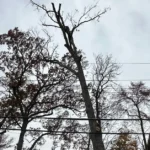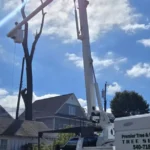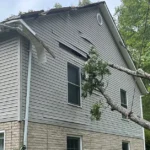
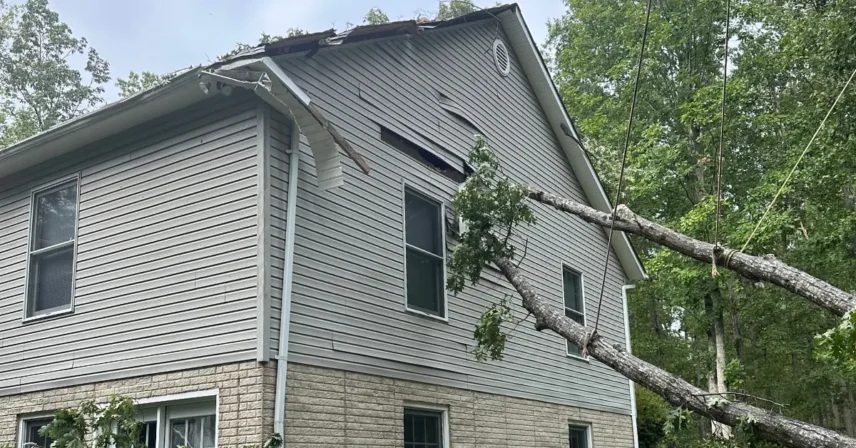
The sudden threat of a falling tree can be alarming for any Northern Virginia homeowner. When high winds, heavy snow, or saturated soils hit our region, trees can become immediate hazards. Knowing what truly constitutes a tree emergency is crucial for protecting your family, property, and making the right call under pressure. This guide from Premier Tree & Landscaping will help you quickly identify critical situations and understand the necessary steps to take.
Key Takeaways
- A tree emergency involves immediate threats to life, property, or essential services, such as power lines.
- Prioritize safety: Call 911 or your utility company for power line issues; contact a certified arborist for other severe hazards.
- Northern Virginia jurisdictions often exempt emergency tree removals from standard permits, but documentation is key.
- Homeowner’s insurance typically covers storm-related tree damage, but not neglect; a ‘Hazard Checklist’ can aid claims.
- Recognize key warning signs like sudden leans, large cracks, heaving soil, and pest infestations that compromise tree stability.
- Premier Tree & Landscaping provides 24/7 emergency tree services for rapid, professional response in the NoVA area.
What is a Tree Emergency? Defining the Immediate Threat
A tree emergency is any situation where a tree or its components pose an immediate, unacceptable risk to people, property, or critical infrastructure. This often involves a high likelihood of failure and a significant impact if it does fail. Swift assessment and action are essential to mitigate potential harm.
Why Identifying a Tree Emergency Matters in Northern Virginia
Identifying a tree emergency quickly in Northern Virginia is vital for several reasons, extending beyond immediate safety. Our region experiences diverse weather, from severe thunderstorms to heavy snow and ice, which can rapidly turn a compromised tree into a catastrophe. Understanding the difference between a minor issue and a true emergency protects your loved ones, prevents costly property damage, and ensures you navigate insurance claims effectively.
- Personal Safety: The most critical reason is to prevent injury or loss of life from falling branches or entire trees.
- Property Protection: Prompt action can save your home, vehicles, fences, and other structures from extensive damage.
- Utility Preservation: Trees impacting power lines can cause widespread outages and create electrocution hazards.
- Insurance Claims: Proper documentation and timely action can significantly impact the success of your homeowner’s insurance claims.
- Preventative Measures: Early identification of high-risk trees allows for scheduled, less costly removal before an emergency occurs.
The Premier Tree & Landscaping NoVA Emergency Decision Matrix
When faced with a potentially hazardous tree, quick thinking is essential. Premier Tree & Landscaping has developed a decision matrix to guide Northern Virginia homeowners through the initial assessment. This framework helps you determine the appropriate level of urgency and who to call first.
Imminent Danger: Call 911 or Utility First
Certain tree situations demand the immediate attention of emergency services or utility providers due to life-threatening risks or widespread disruption. Do not approach these situations yourself. If you hear buzzing, see sparks, or smell burning near a tree or line, treat it as an electrical emergency and call 911 immediately.
- Tree on Power Lines: If a tree or any part of it is touching utility lines, call 911 immediately. Do not touch the tree or anything it is touching. This is an electrocution hazard.
- Tree Blocking Public Roadway: If a large tree has fallen and is completely obstructing a public road, contact 911 or your local non-emergency police line. They will coordinate with public works.
- Tree Fallen on Occupied Structure: If a tree has fallen onto your home or a vehicle with people inside, ensure everyone’s safety and call 911. Fire departments can often assist with initial stabilization.
High-Priority Tree Risks: Call Premier Tree & Landscaping Immediately
These scenarios indicate a high likelihood of failure and significant impact, requiring a rapid response from certified arborists like Premier Tree & Landscaping. We are equipped for 24/7 emergency tree removal services.
- Tree Actively Splitting or Cracking: Visible, fresh cracks in the trunk or major limbs, especially after a storm, indicate imminent failure.
- Tree Leaning Severely & Rapidly: A sudden, noticeable lean, particularly if the soil around the base is heaving or cracking, signals root plate failure.
- Large Hanging Branches (Widowmakers): Large, broken branches suspended precariously in the canopy pose a severe falling hazard. These are especially dangerous in windy conditions.
- Tree Fallen, Blocking Access/Damaging Property (No Power Lines): If a tree has fallen on your property, blocking your driveway, or damaging structures (but not involving power lines), contact us for immediate assessment and removal.
- Hazard Checklist for Insurance (NoVA Specific): Documenting these high-priority risks is vital for insurance claims. Take photos and notes. A certified arborist’s assessment from Premier Tree & Landscaping can provide crucial evidence.
Urgent but Not Immediate: Schedule Prompt Assessment
These situations require prompt professional attention but may not necessitate a middle-of-the-night emergency call. Scheduling a timely assessment can prevent them from escalating into true emergencies.
- Dead or Dying Trees: A tree with no leaves, peeling bark, or significant dieback is structurally weaker. While not always an immediate fall risk, it’s a known hazard that needs removal.
- Significant Pest Infestation: Widespread damage from pests like the Emerald Ash Borer or Spotted Lanternfly can compromise a tree’s integrity over time, making it prone to sudden failure.
- Large Cavities or Decay: Visible rot, large holes, or fungal fruiting bodies (mushrooms) at the base or on the trunk indicate internal decay that weakens the tree’s structure.
- Root Damage: Construction activities, trenching, or severe storms can damage a tree’s root system, leading to instability that may not be immediately apparent.
Common Warning Signs of a Hazardous Tree in NoVA
Recognizing the subtle and overt signs of a hazardous tree is the first step in prevention. Many trees in Northern Virginia face stress from our climate, soil conditions, and regional pests. Knowing what to look for can help you identify a problem before it becomes an emergency. The Virginia Cooperative Extension offers excellent resources on evaluating tree health, such as their publication “How to Evaluate a Tree”.
Structural Defects
Structural issues are often the most direct indicators of a tree’s instability. These defects compromise the tree’s ability to withstand environmental stressors.
- Cracks: Vertical or horizontal cracks in the trunk or major limbs, especially those that appear fresh or are widening.
- Weak Branch Unions: Branches that form a tight ‘V’ shape rather than a strong ‘U’ shape are prone to splitting. Often, bark is included within the union, weakening it further.
- Missing Bark/Open Wounds: Large areas where bark is missing expose the inner wood to decay and pests.
- Cankers: Sunken areas on branches or trunks where the bark has died, often caused by disease, indicating compromised structural integrity.
Pest and Disease Indicators
Biotic factors, like pests and diseases, can severely weaken a tree from the inside out, leading to sudden failure. Northern Virginia has specific threats to monitor.
- Emerald Ash Borer (EAB): This invasive beetle has devastated ash trees across NoVA. Signs include D-shaped exit holes, S-shaped galleries under the bark, and canopy dieback. EAB-infested ash trees become extremely brittle and are high-risk.
- Spotted Lanternfly: While primarily a sap-sucking pest, heavy infestations can stress trees, making them susceptible to other issues. Look for egg masses, honeydew, and sooty mold.
- Extensive Decay or Fungus: Mushrooms or conks growing on the trunk or at the base of a tree indicate internal wood decay. The USDA Forest Service Hazard Tree Identification Guide provides visual examples of such indicators.
Root and Soil Issues
The stability of a tree is directly tied to its root system and the surrounding soil. Issues here can lead to a tree toppling without warning.
- Heaving Soil: A dome of soil rising around the base of the tree indicates that the root plate is failing, and the tree is beginning to tip.
- Exposed or Damaged Roots: Severed or girdling roots, especially large ones, can compromise stability and nutrient uptake.
- Trunk Girdling: Roots or other structures constricting the trunk at the soil line can choke the tree and weaken its base.
- Past Construction Damage: Any construction near a tree’s root zone can lead to delayed decline and instability.
Navigating Local Regulations and Insurance for Emergency Tree Removal in NoVA
Understanding the local regulations and insurance implications for emergency tree removal in Northern Virginia is crucial. While safety is always paramount, navigating these aspects correctly can save you significant time and money. The Virginia Department of Forestry provides resources on tree care and storm damage, which can be helpful.
| Aspect | Emergency Tree Removal (NoVA) | Non-Emergency Tree Removal (NoVA) |
| Permit Requirement | Often exempt in jurisdictions like Fairfax, Loudoun, or Alexandria if the tree poses an ‘imminent threat’ to life or property. Permit rules vary by jurisdiction and situation, so confirmation with local authorities or your arborist is recommended. | Typically requires a tree removal permit, especially for mature or protected trees. Process can take weeks, involving application and review. |
| Response Time | Immediate, 24/7 service from certified arborists like Premier Tree & Landscaping. | Scheduled during business hours; planned well in advance. |
| Cost Factors | Higher due to immediate dispatch, specialized equipment, after-hours work, and hazardous conditions. Often covered by homeowner’s insurance. | Lower, as it’s planned. Costs vary based on tree size, location, and complexity. Generally not covered by insurance unless part of a larger landscaping project. |
| Insurance Coverage | Likely covered if damage is caused by a ‘peril’ (e.g., storm) and the tree was not previously neglected (‘Duty of Care’). Requires proper documentation. | Generally not covered. Considered a homeowner’s maintenance responsibility. |
| Risk Level | High risk to property and safety. Requires specialized training and equipment for safe removal. | Lower risk; removal can be planned and executed under optimal conditions. |
What to Do (and Not Do) During a Tree Emergency
When a tree emergency strikes, your actions in the immediate aftermath can make a significant difference in safety and outcome. Knowing what steps to take, and equally important, what to avoid, is crucial.
- DO: Prioritize safety. Move people and pets away from the danger zone.
- DO: Call 911 or your utility company immediately if power lines are involved. Assume all downed lines are live.
- DO: Contact a certified arborist like Premier Tree & Landscaping for professional assessment and removal. We have the expertise and equipment for hazardous situations.
- DO: Document everything. Take photos and videos of the tree, any damage, and the surrounding area. This is vital for insurance claims and permit discussions. The industry standard for assessing such risks is often guided by principles found in Tree Risk Assessment.
- DO NOT: Attempt to remove large branches or a fallen tree yourself, especially if it’s large or under tension. This is extremely dangerous.
- DO NOT: Approach any tree touching a power line. Stay at least 30 feet away.
- DO NOT: Wait to call for help. Even if it seems minor, a compromised tree can fail completely without warning.
- DO NOT: Try to clear debris that is under tension or entangled. Leave it to the professionals.
Conclusion
Identifying a true tree emergency in Northern Virginia requires quick, informed judgment. Understanding the specific signs and knowing when to act protects your property, ensures safety, and supports potential insurance claims. Premier Tree & Landscaping is ready 24/7 to assess and address urgent tree hazards with expertise and care. Do not hesitate to contact us if you suspect a tree on your property poses an immediate threat to life or property.
Frequently Asked Questions
What is the primary definition of a tree emergency?
A tree emergency is any situation where a tree or its parts pose an immediate threat to people, property, or essential services. This includes fallen trees, trees actively splitting, or those leaning precariously towards structures or power lines.
What should I do first if I think I have a tree emergency?
Always prioritize safety. If a tree is touching power lines, call 911 or your utility company (like Dominion Energy) first. For other severe hazards, secure the area, keep people and pets away, and then contact a certified arborist like Premier Tree & Landscaping immediately.
Can a leaning tree be considered an emergency?
Yes. A sudden or increasing lean, especially with cracked soil or exposed roots, can indicate root failure and should be evaluated immediately by a certified arborist.
Do I need a permit for emergency tree removal in Northern Virginia?
Many Northern Virginia jurisdictions, including Fairfax and Loudoun Counties, often exempt emergency tree removals from standard permit requirements if the tree poses an ‘imminent threat.’ However, it’s wise to document the situation and confirm with local authorities or your arborist.
Will my homeowner’s insurance cover emergency tree removal costs?
Yes, insurance typically covers tree damage if the tree was healthy before the incident and fell due to a ‘peril’ like a storm. However, damage from a pre-existing, neglected hazardous tree may be denied due to ‘Duty of Care.’ Documenting the tree’s condition is crucial.
What are common visual signs of a tree that is about to fall?
Common signs include sudden leaning, large cracks in the trunk or major limbs, heaving soil around the base, significant rot or fungal growth, and widespread insect infestation (e.g., Emerald Ash Borer) causing structural compromise.
How can Premier Tree & Landscaping help with a tree emergency?
Premier Tree & Landscaping offers 24/7 emergency services for Northern Virginia. Our certified arborists can quickly assess the situation, safely remove hazardous trees, and help you navigate the process. Visit our website at Premier Tree & Landscaping for more information.
Is a dead tree always considered an emergency?
While a dead tree isn’t always an immediate emergency, it becomes one if it’s large, close to structures, or shows signs of instability, especially during high winds or saturated soil conditions common in NoVA. Dead trees are structurally weaker and pose a higher risk.